Discovering the Beauty and Science of Quartzite


Intro
Quartzite holds an undeniable charm that captures the attention of both geologists and collectors alike. As a natural metamorphic rock, it emerges from sandstone under immense pressure and heat, transforming it into a dense, durable material that's often used in architecture and design. But beyond its practical applications, quartzite is a treasure trove for those with an eye for aesthetics and an appreciation for nature’s artistry.
This article aims to untangle the allure of quartzite, exploring its various types, irresistible beauty, and fundamental significance in the world of geology. We will dig deep into the imagery associated with quartzite, painting vivid portraits of its formation, texture, and color variations. By bridging both the scientific aspects with visual fascination, we hope to enrich the understanding of enthusiasts eager to expand their rock collection or enhance their geological knowledge.
Types of Collectibles
Overview of Collectible Categories
When it comes to quartzite, the realm of collectibles is diverse and intriguing. The rock can be categorized into different types based on its physical properties, geographical origin, and even the intended use, which can vary from decorative pieces to geological specimens. Here’s a detailed look at the various categories that quartzite collectibles can fall into:
- Specimens for Education: Often sourced from specific locations, these stones are prized for their educational value, showcasing unique formations and textures.
- Decorative Items: Many collectors favor quartzite that has been polished or sculpted into artistic forms, serving as impactful décor.
- Raw Samples: Unrefined pieces of quartzite can highlight the natural state of the rock, perfect for those who appreciate its rugged authenticity.
These categories not only serve different purposes but also attract different kinds of collectors.
In-Depth Look at Each Category
Delving deeper into each category allows for a more comprehensive understanding of what makes quartzite appealing:
- Specimens for Education: These pieces are often accompanied by geological information, such as their origin and mineral composition, making them ideal for students and enthusiasts alike. Collectors might seek out specific geographical samples, like those from the Appalachian region, known for their distinct patterns and colors.
- Decorative Items: This category caters to those who want to incorporate quartzite into their living spaces. From elegant coasters made from polished quartzite to statement pieces like coffee tables, these items draw the eye and spark conversation. Many artisans are now creating unique pieces that highlight the natural veins and colors unique to quartzite.
- Raw Samples: These pieces cater to purists who find beauty in the rock’s unrefined state. Raw quartzite can display a stunning array of colors from soft grays to bold oranges, making them a favorite among collectors who appreciate their geological story.
"In the world of collecting, the narrative behind the piece often adds more value than the piece itself."
Understanding these categories helps collectors identify what resonates with them and allows for a more targeted acquisition strategy.
Identification Techniques
Essential Tools for Collectors
When it comes to identifying quartzite, having the right tools can make all the difference. Collectors should consider equipping themselves with:
- Hand Lens or Loupe: Useful for examining the intricate textures and mineral composition.
- Pocket Knife: Handy for conducting scratch tests to gauge hardness.
- Mohs Hardness Kit: A great resource for measuring the hardness level against other minerals.
The use of these tools not only enhances the identification process, but it also enriches the overall collecting experience.
Identification Methods for Rocks and Minerals
Identifying quartzite can sometimes be tricky, as it can mimic other rocks like sandstone. Here are some methods to ensure accurate identification:
- Visual Inspection: Look for the glassy luster and finer grain compared to sandstone.
- Hardness Test: Quartzite is significantly harder than many sedimentary rocks, so using a pocket knife can help differentiate.
- Acid Test: Unlike limestone, quartzite does not react to dilute hydrochloric acid.
With these methods in hand, collectors can confidently add authentic quartzite pieces to their collections, ensuring a high level of quality and authenticity.
Maintenance and research can only deepen one’s appreciation for these magnificent stones, making the world of quartzite a truly captivating pursuit.
Understanding Quartzite
Quartzite is more than just a rock; it’s a testament to nature’s incredible processes and resilience. In this section, we’ll focus on its definition, how it forms, and the geological significance that makes quartzite noteworthy not just for geologists, but also for collectors and enthusiasts alike. Grasping these elements provides a solid foundation for appreciating the allure that quartzite holds in both natural beauty and scientific exploration.
Definition and Composition
At its core, quartzite is a metamorphic rock that originates from sandstone. Unlike many rocks that have complex origins, quartzite has a rather straightforward backstory. Sandstone consists primarily of quartz grains that are bound together mostly by silica. When subjected to high temperatures and immense pressure during geological processes, this sandstone metamorphoses into quartzite. This transformation results in a rock that is tougher and denser than its predecessor.
- Composition Highlights:
- Predominantly made of quartz, giving it strength and resistance.
- Often includes traces of feldspar, mica, or other minerals which add to its visual appeal.
- The mineral content and variations significantly influence its coloration and features, presenting a spectrum from creamy beige to fiery reds and deep greens.
You may come across quartzite that sparkles, depending on its crystalline structure and mineral inclusions. This aesthetic quality is part of what draws many collectors and artists to quartzite's charm.
Formation Process
The journey of quartzite typically begins deep within the earth, where conditions of heat and pressure reign. Sandstone becomes quartzite through a process known as metamorphism. Here are the stages that detail this fascinating transition:
- Depositional Phase:
Initially, quartz-rich sand accumulates in layers, often from ancient bodies of water. - Burial and Compression:
Over eons, the layers are buried under additional sediments, increasing pressure. - Metamorphic Alteration:
With temperature rising as depth increases, silica cement dissolves and reprecipitates, bonding the quartz grains in a dense matrix.
This entire sequence not only reshapes the rock but also encases it within layers of history, making each piece unique. Collectors often look for specific characteristics that unveil this story.
Geological Significance
The importance of quartzite stretches beyond its beauty; it serves as a significant marker within various geological timelines. Understanding quartzite’s formation and characteristics provides insights into the earth’s evolutionary history. Here are some of its geological significances:
- Indicator of Past Environments:
Quartzite often indicates that a region underwent significant weathering and erosion, revealing clues about ancient landscapes. - Resource for Studying Metamorphism:
It acts as a natural laboratory for understanding metamorphism and the conditions that shape such transformations, useful for both earth scientists and educators. - Symbol of Durability:
Its hardness and ability to withstand weathering make quartzite a preferred material in construction, further emphasizing its relevance in everyday life.
"Understanding quartzite is essential not only for appreciating its stunning form but also for grasping the dynamic processes that shape our planet."


Visual Characteristics of Quartzite
Understanding the visual qualities of quartzite plays a critical role in appreciating this unique rock. Its distinct features not only enhance its aesthetic appeal but also inform collectors and enthusiasts about its formation and geological significance. Visual characteristics provide insights into the mineral makeup, durability, and potential applications in design and landscaping. A deep dive into these elements reveals the allure that draws many to collect quartzite.
Color Variations
Quartzite exhibits a spectrum of captivating colors that arise from its mineral composition and the conditions under which it formed. The hues can range from subtle whites and greys to vibrant reds, blues, and purples, depending on the impurities present during its metamorphosis.
For instance, a quartzite rich in iron oxide tends to boast reddish or pinkish tones, while those containing chlorite may reveal greenish shades. These color variations not only enhance the stone's beauty but also provide vital clues about the geological history of the region where it originated. Collectors often seek these distinct shades, as each piece tells a story through its color palette.
When documenting quartzite for personal collections or geological studies, it is useful to note the exact coloration. Here are a few popular varieties:
- White Quartzite: Often pure and reflective, favored for its elegance.
- Red or Pink Quartzite: Adds warmth and character, typically used in outdoor applications.
- Green Quartzite: An unusual find that can bring a unique twist to any collection.
This visually engaging diversity makes quartzite a popular choice not just in geological circles but also in artistic and design sectors.
Texture and Patterns
The texture of quartzite can be as enchanting as its colors. The rock typically features a granular appearance, with visible crystals that can make each piece feel truly unique. This feature arises from the dramatic quartz grains, which can be both coarse and fine, depending on the metamorphic conditions.
Patterns within quartzite, often the result of mineral alignment during formation, can encapsulate a variety of visuals. Common patterns include:
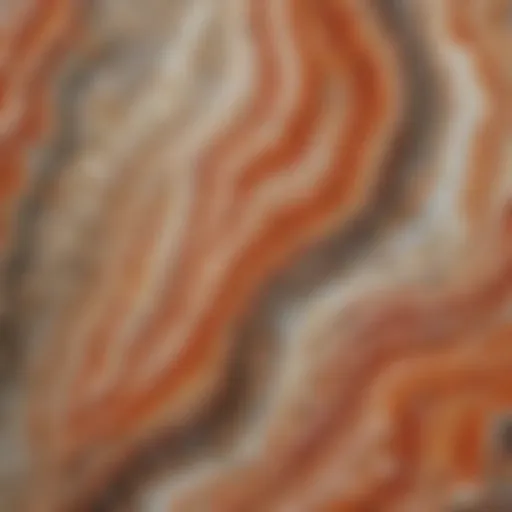
- Wavy Banding: A result of fluid movements in the rock during formation.
- Speckled Granules: A delightful mix of colors and textures, often used in decorative applications.
- Swirls and Veins: Adding rhythm and flow to the stone's overall appearance.
These textures and patterns can give enthusiasts clues about the quartzite's origin and geological history. Collectors appreciate pieces with distinctive formations, as they are often conversation starters.
Translucency and Luster
One of the most striking visual characteristics of quartzite is its translucency. Quality specimens can exhibit a glass-like luster, ranging from a subtle sheen to a bright, almost reflective surface. This translucence occurs primarily due to the high quartz content, which allows light to partially pass through.
This quality is particularly sought after in the world of design, where translucent quartzite is used in countertops and decorative features to create an alluring visual impact. When backlit, the stone can illuminate with a warm glow, transforming a mundane space into an elegant setting.
In terms of luster, quartzite falls into categories such as:
- Vitrous: Reflective and smooth, akin to glass, often seen in finer quality stones.
- Dull: These may not be as visually appealing, but they can still be valuable in certain contexts.
A well-polished piece can showcase the luster of quartzite to its fullest, making it an eye-catching addition to any collection.
Overall, the visual characteristics of quartzite not only tantalize the eyes but also enrich our understanding of the geological processes that shaped it. This interplay between beauty and science is what makes quartzite a truly captivating subject for enthusiasts and collectors alike.
Collecting Quartzite Images
In the realm of geology and rock collecting, acquiring stunning images of quartzite holds substantial value. For rock enthusiasts and collectors, images serve more than just an aesthetic purpose—they create a bridge between the physical and the conceptual. Engaging with visual representations of quartzite deepens one's appreciation for this metamorphic marvel and enriches the educational experience.
Photography Techniques
Capturing the essence of quartzite requires a combination of artistic insight and technical know-how. Utilizing the right photography techniques can make all the difference when showcasing the stone's unique colors and textures.
Consider the following tips for photography:
- Natural Lighting: The best time to photograph quartzite is during the golden hours—shortly after sunrise or before sunset. This soft light enhances the stone’s natural luster and brings out subtle hues that might go unnoticed otherwise.
- Close-Ups: A close-up shot can reveal intricate patterns and textures present in quartzite. Using a macro lens can help focus on these details while blurring the background to create an immersive effect, drawing viewers into the complexity of the rock.
- Angles and Perspectives: Experimenting with different angles allows for diverse interpretations of quartzite’s surface. A low-angle shot can impart drama to the image, while a top-down view may highlight the stone's layered appearance.
By applying these techniques, one can produce images that not only showcase quartzite’s physical beauty but also tell a story about its geological origins.
Notable Image Collections
Exploring existing collections can serve as an inspiration for budding photographers and collectors alike. Numerous institutions and organizations have curated extensive galleries dedicated to quartzite, showcasing its variations across different regions. A few noteworthy sources include:
- The Smithsonian Institution: The Smithsonian’s National Museum of Natural History features impressive collections of quartzite, with images that highlight the stone’s visual characteristics and geological formation. More info can be found at smithsonian.edu.
- The Geological Society of America: This organization often publishes works that include stunning imagery of quartzite found in various geological settings. Their resources offer insight and context for collectors wishing to deepen their understanding of the stone. Visit geosociety.org for more.
- Social Media Platforms: Platforms like Instagram and Reddit have communities dedicated to geology and photography, where users share their quartzite images, techniques, and stories. Engaging with these collections can spark new ideas and connect enthusiasts worldwide.
Ethics of Collecting Images
As thrilling as it is to gather quartzite images, ethical considerations must not be overlooked. Respect for nature and the origins of these images is vital for preserving geological integrity.
Some points to keep in mind include:
- Credit Original Sources: When sharing images, ensure proper attribution to the original photographers, especially when using someone else's work. This not only fosters goodwill but also nurtures a community of respect.
- Permissions: If you're planning to photograph quartzite on-site, consider seeking permission from landowners or authorities. Some sites may have restrictions to protect their natural resources.
- Conservation Awareness: Highlighting the beauty of quartzite can draw attention to the importance of conservation efforts. Encourage your audience to support environmentally conscious practices to ensure these geological wonders are preserved for future generations.
"A photograph is not only a tool for documentation, but an entry into the narrative of nature’s artistry—a story worth telling carefully."
In summary, collecting quartzite images is an important activity that blends passion, artistry, and ethical responsibility. Through thoughtful photography techniques, engagement with notable collections, and a strong commitment to ethics, collectors can contribute to a richer understanding of quartzite and its significance.
Artistic Representations of Quartzite
Artistic representations of quartzite breathe an added layer of depth into the appreciation of this remarkable rock. Artists, like geologists, showcase quartzite in ways that speak to its beauty and versatility. By integrating various mediums—be it painting, sculpture, or mixed media—these works elucidate the unique qualities of quartzite while straying from traditional presentations. They offer both aesthetic allure and a commentary on the geological processes that shape our natural world. In examining these artistic expressions, one can grasp a different aspect of quartzite's story, transcending the boundaries of the scientific narrative.
Quartzite in Modern Art


Modern art often embraces nature and the materials it offers, and quartzite is no exception. Artists today leverage this stone's strength and textures to create compelling pieces that resonate with viewers. From minimalist sculptures to expansive wall installations, quartzite embodies a raw tactile quality that can evoke emotion and provoke thought.
Consider the work of contemporary sculptor Richard Serra, who utilizes large slices of quartzite in his monumental pieces. His work forces the audience to interact with the stone on a personal level, engaging with the materiality and weight of quartzite itself. Each piece not only reflects the physical properties of the stone but also the culture and ideas surrounding it, presenting a narrative that connects geology with artistry.
These creative expressions highlight how quartzite can be a medium through which artists explore themes like resilience, history, and the passage of time. They serve to remind us that every block of quartzite carries within it the complexities of geological formation, transforming into a canvas for modern exploration.
Cultural Interpretations
Cultural interpretations of quartzite are rich and varied across different societies. In some indigenous cultures, this stone is more than just a material; it holds spiritual significance, often appearing in sacred sites or traditional artifacts. The use of quartzite in tools, like arrowheads and grinding stones, showcases its practical applications throughout human history. Through these artifacts, one can trace not only technological advancement but also cultural narratives that give life to our understanding of quartzite.
In contemporary settings, artists may incorporate quartzite into their work to comment on cultural identity and the relationships between people and the land. The stone becomes a symbol—a representation of connection to the earth, both physically and metaphorically. Its diverse colors and patterns evoke distinct regional styles, allowing artists to weave local narratives into their pieces. In this way, quartzite is transcending its geological origins to find meanings that resonate deeply within human experiences and expressions.
Nature-Based Art Forms
Nature-based art forms utilize quartzite in ways that profoundly respect and reflect the environment from which it originates. Artists gravitate towards the stone for its relationship to the natural world, often emphasizing the harmony between human creativity and geological science. Many installations created from quartzite aim to provoke reflection about nature's processes.
Land art, for instance, allows artists to forge connections with the environment directly, using quartzite as both subject and medium. The work of artists like Andy Goldsworthy, who incorporates native materials into his temporary installations, showcases how quartzite can be intertwined with natural landscapes. His pieces invite viewers to appreciate the beauty of erosion, weathering, and the materials from which art is created.
Through these nature-based undertakings, artists emphasize sustainability and evoke a greater awareness of the ecological impacts of mining and resource extraction. The art serves as a reminder that, while beautiful, quartzite's existence is linked to the earth's processes, and thus should be approached with mindfulness and appreciation.
As we delve deeper into artistic representations of quartzite, it becomes clear that these expressions not only enrich the aesthetic landscape but also foster connections between the geological and the human narrative. Each artwork serves as a window into how we perceive and interact with this natural wonder, encouraging a dialogue that bridges art, science, and culture.
Quartzite in Construction and Design
The relevance of quartzite in construction and design cannot be overstated. This unique metamorphic rock, formed from sandstone under intense heat and pressure, combines beauty and durability, making it a favorite among architects and builders alike. As a material, quartzite offers several advantages, from aesthetic appeal to practical benefits, which is why it's becoming increasingly popular in various construction projects.
Use in Architectural Projects
Quartzite’s versatility shines in architectural projects, ranging from commercial buildings to residential spaces. Its broad spectrum of colors—from soft grays to vibrant reds and even soft greens—enables designers to find the perfect match for any vision. The dense and resilient nature of quartzite makes it suitable for high-traffic areas, where wear and tear can be a concern. This durability translates into lower maintenance costs over time, giving it an edge over softer stones like marble or limestone.
Incorporating quartzite into facades can certainly elevate a building’s exterior, giving it a timeless yet contemporary look. Not only does quartzite hold up against the elements, but it also reflects heat effectively, contributing to energy efficiency in buildings. Architects often use quartzite not just for its strength but also for the way it interacts with light; the varying textures and colors can create stunning visual effects. Choosing quartzite for projects can convey an image of luxury while ensuring lasting performance.
Landscaping Applications
When it comes to landscaping, quartzite proves to be a remarkable choice too. Its aesthetic appeal complements the natural beauty of outdoor spaces, working harmoniously with plant life and other materials. Whether used in pathways, patios, or retaining walls, quartzite provides a natural yet sophisticated element to landscaping designs. It can be easily cut and shaped, allowing for creativity in design.
The beneficial attributes of quartzite in landscaping include its resistance to environmental wear. Being sturdy, it can effectively resist crushing and shattering due to frost or freeze-and-thaw cycles. This makes quartzite an ideal candidate for outdoor applications that will be exposed to harsh weather conditions.
Besides its practical properties, quartzite can add texture and color variety to landscape projects. When used in stone gardens or as decorative boulders, it stands out, blending seamlessly while still making a statement.
"Quartzite enhances outdoor aesthetics while providing durability, making it a preferred choice in landscape architecture."
Interior Design Inspirations
In the realm of interior design, quartzite offers a wealth of inspiration. Homeowners and designers are increasingly opting for quartzite countertops, backsplashes, and flooring due to its striking visual appeal and high performance. A quartzite countertop can serve as a stunning centerpiece in a kitchen or bathroom, boasting not only beauty but also resistance to scratches and heat.
The natural patterns found in quartzite make it an art piece on its own. Each slab is unique, featuring bold veining and various color blends that can complement a wide range of design styles, from rustic to modern. Beyond countertops, quartzite can be utilized in shower walls and flooring, showcasing its versatility.
Additionally, quartzite works well within a variety of color palettes, making it a fitting choice for both neutral and vibrant designs. By incorporating quartzite, designers can achieve a cohesive look that speaks to elegance and functionality.
The Impact of Quartzite Mining
Quartzite mining plays a critical role not only in the economic fabric but also in the environmental landscape. This section explores the intricacies of quartzite mining, addressing environmental concerns, economic implications, and sustainable practices. Understanding these aspects not just charms rock enthusiasts and collectors but also fosters a broader awareness of how geological resources can be responsibly managed.
Environmental Considerations
The exploitation of quartzite, while beneficial in numerous ways, raises pressing environmental issues. Mining operations often lead to habitat destruction, soil erosion, and disruption of local wildlife. The careful balance that must be struck between resource extraction and ecological preservation is a nuanced topic.
For instance, when mining occurs in sensitive ecosystems, the negative impacts can ripple through the food chain, affecting species that depend on that habitat. Moreover, dust and runoff from the mining processes can contaminate nearby waterways, posing a threat to both aquatic life and human populations relying on these water sources for sustenance.
Some mines have implemented mitigation strategies that include:
- Rehabilitating disturbed lands after mining ceases
- Establishing buffer zones to protect local fauna
- Using advanced technology to minimize waste and pollution
"Natural resources need to be managed like a fine handkerchief; one wrong move can lead to a hole that cannot be repaired."
Economic Implications
Quartzite mining is often a significant source of income for local economies. It creates jobs both directly in the mining sector and indirectly through various associated industries. The revenue generated from quartzite exports can lead to improved infrastructure and enhanced living standards in mining regions.
However, this economic windfall isn't without its challenges. The reliance on mining as a primary economic driver can lead to boom-and-bust cycles, making local economies vulnerable during downturns. Additionally, there are concerns regarding fair wages and labor conditions within the industry.
Balancing profit with social responsibility can be tricky, yet it is critical to ensure that local communities benefit equitably from the mining of quartzite. Efforts to invest in community development can lead to long-term stability.
Sustainable Practices


Sustainability in quartzite mining is not merely a buzzword but a necessity. As society increasingly recognizes the importance of protecting our planet, mining companies are being called to adopt more sustainable practices. These practices can take many forms:
- Recycling: Utilizing waste materials from quartzite operations in other industries reduces the need for virgin material extraction.
- Responsible sourcing: Companies are beginning to trace the origins of materials to ensure they come from ethical and environmentally-responsible operations.
- Innovative technologies: The use of cleaner energy sources and more efficient processing methods can dramatically lower the carbon footprint associated with quartzite extraction.
Engaging the rock and fossil collecting community in these practices can promote a culture of mindfulness and showcase how enthusiasts can support sustainable initiatives.
Quartzite in Education and Research
Education and research play a pivotal role in understanding quartzite, especially as interest in geology and natural sciences gains momentum among students and enthusiasts alike. Quartzite, with its unique properties and formation processes, serves as an exemplary subject for teaching complex geological principles. It is not just a rock; it’s a window into Earth’s history, making it a valuable educational tool.
Teaching Geology with Quartzite
Teaching geology with quartzite brings forth a hands-on opportunity for students to engage with the subject matter intimately. Unlike textbooks that can sometimes feel flat, studying quartzite allows students to appreciate its textural diversity and see firsthand the geological processes that created it.
- Physical Properties: Touching and examining samples of quartzite helps learners grasp essential concepts such as metamorphism. Seeing the varying degrees of hardness and lustrous surfaces in real life makes lessons about mineral structures more tangible.
- Location Studies: Teachers can integrate field trips to quartzite outcrops, which helps students understand sedimentation and tectonics directly. Recognizing quartzite in its natural surroundings roots theoretical knowledge in practical experience.
Research Opportunities
The academic exploration of quartzite offers numerous research avenues. Geologists, material scientists, and conservationists show increasing interest in quartzite's properties and performance in various applications. Some noble paths for research include:
- Sustainability Studies: Investigating sustainable mining practices and their impacts on ecosystems. Field studies can document real-world consequences of quartzite extraction, contributing to better environmental policies.
- Material Science Applications: Understanding how quartzite can be utilized in modern building materials or as a replacement for other, less sustainable resources is an area ripe for research. Studies might focus on the durability and maintenance of quartzite in urban settings.
- Cultural Significance: Examining the role quartzite has played in historical contexts, such as indigenous uses and traditional craftsmanship. This opens avenues for interdisciplinary studies that blend geology with anthropology.
Case Studies and Field Work
Case studies focusing on quartzite offer a rich narrative, illustrating both geological processes and human interactions with the rock. Fieldwork becomes integral in these studies, providing students and researchers with a visual and tangible context for their findings. Consider:
- Regional Case Studies: Each quartzite formation has a unique story to tell. A case study might revolve around the Wisconsin Dells, featuring its unique quartzite cliffs that attract thousands of tourists and serve as a geological landmark.
- Impact Assessments: Evaluation of quarrying activities on local communities and ecosystems can offer comprehensive insights into balancing economic benefits with environmental health. This data is crucial for future mining activities and community planning.
"In exploring quartzite, we not only learn about the rock itself but about the confluence of natural history and human endeavor."
Ultimately, quartzite serves as a versatile tool in education and research, enabling insights that bridge theoretical knowledge with real-world applications. Whether through hands-on teaching, innovative research, or local case studies, the allure of quartzite continues to inspire and educate both beginners and seasoned geologists alike.
For further reading on geological studies and resources, visit Wikipedia or explore ongoing projects at NASA's Earth Observatory.
Exploring Quartzite Variants
Quartzite is more than just a pretty face; it has layers, both literally and figuratively. Understanding the different variants of quartzite not only enriches an enthusiast's appreciation of this metamorphic rock but also opens doors to better knowledge on geology and mineralogy. Subtle differences in composition can lead to significant variations in appearance and characteristics, thus making it critical for collectors and professionals alike to differentiate between these variants. It adds depth to conversations, enhances research, and helps in the identification of field samples.
Rhyolite and Related Rocks
Rhyolite and quartzite often find themselves painted by the same brush due to their shared origin as igneous rocks. To the untrained eye, they might appear cousins in the stone world. However, diving deeper reveals their unique attributes.
Rhyolite is volcanic, formed from lava that cools quickly on the Earth’s surface, resulting in a fine-grained texture. Contrast this with quartzite; it receives its identity from sandstones that undergo metamorphosis under high heat and pressure. In practical terms, this means that while both rocks can display beautiful colors and patterns, rhyolite will often carry the remnants of its volcanic gas bubbles—those tiny pockets that reflect light in unexpected ways.
Collectors should pay attention to these nuances as they explore the materials at hand. A raw piece of rhyolite can yield incredible opportunities for craftsmanship, while quartzite can shine in architectural applications.
Differences Between Quartzite and Sandstone
At first glance, quartzite and sandstone may seem like two peas in a pod—both primarily composed of quartz. However, their paths diverge spectacularly. Sandstone is a sedimentary rock, primarily formed from mineral particles and consolidated amounts of sand. On the other hand, quartzite emerges from sandstone that gets metamorphosed under exposure to intense heat and pressure, transforming its structure fundamentally.
This difference in formation reflects in their durability and utility. Quartzite is tougher and more resistant to weathering and erosion compared to sandstone. For those in construction or landscaping, this is a pivotal factor to consider.
- Color and Patterns: While both can boast a variety of colors, quartzite typically bears more vivid hues due to the differing minerals present.
- Durability: Quartzite wins hands down in terms of strength. It can handle outdoor conditions much better than sandstone.
- Uses: Sandstone might be preferable for certain aesthetic applications indoors, but quartzite’s resilience makes it the go-to for countertops and outdoor installations.
Recognizing Regional Variations
Regional variations are what keep the study of quartzite refreshing and exciting. Take, for instance, the quartzite found in the Appalachian Mountains. The geological history of this region has blessed its quartzite with distinct layers and textures that tell stories millions of years old.
Conversely, quartzite from the Rocky Mountains may showcase different mineral components due to variations in local vegetation and ancient ocean floors that once existed there. The regional climate can also influence the coloration, resulting in stunning visuals that are as unique as the landscape itself.
For rock hounds and collectors, this means there’s always something new to discover, be it through fieldwork or visiting local geological museums. Keeping an eye out for these regional characteristics will not only make your collection stand out but will also deepen your understanding of the Earth’s complex history.
"Exploring variants of quartzite isn't just about acquiring stones. It’s about connecting with the stories they carry."
Thus, having a well-rounded understanding of these particular aspects of quartzite enhances one’s knowledge and appreciation immensely—making each piece more than just a collector's item, but a narrative that speaks of its origin.
Concluding Thoughts
The exploration of quartzite in this article sheds light on the multifaceted nature of this metamorphic rock. It's more than just a geological formation; it embodies a rich tapestry of history, artistry, and environmental considerations. With each chapter, we have assembled a thorough examination of quartzite, its properties, and its impact across various domains.
The Future of Quartzite Studies
Looking ahead, the study of quartzite is poised for growth. As interest in sustainable construction materials rises, quartzite stands as a strong contender due to its durability and aesthetic appeal. Researchers are now focusing on investigating its properties more deeply, particularly its resilience under various environmental conditions. This will surely enhance our understanding of not only quartzite but also the broader category of metamorphic rocks. Additionally, local geology clubs and universities are starting to hold workshops and field trips, exposing enthusiasts to hands-on learning opportunities that could spur a new generation of collectors and researchers.
Integrating Knowledge Across Fields
One significant element that has emerged is the need to bridge the gaps between geology, art, and environmental science. Quartzite serves as a perfect intersection point for these disciplines. For instance, artists may gain inspiration from its unique colors and textures in creating sculptures or installations, while geologists can study its formation process to understand mountain-building events. Collaborations between these sectors not only enrich academic dialogue but also encourage innovative uses and adaptations of quartzite in various fields, from architecture to landscaping. Engaging with experts from each discipline can provide new insights and applications that benefit all parties involved.
Encouraging Community Engagement
Fostering community engagement plays a vital role in the future of quartzite studies. Museums and local geological societies can organize events and exhibitions that invite the public to explore the intricacies of quartzite. Educational programs highlighting its relevance can spark interest among students, prompting them to dig deeper. Field trips and hands-on workshops will help build a community of conservationists and collectors who appreciate quartzite's beauty and complexity. Additionally, online platforms, such as subreddit communities and educational Facebook groups, can serve as hubs for sharing knowledge, images, and resources related to quartzite. These initiatives not only disseminate information but also create a sense of belonging among enthusiasts.
In summary, as we pull together the threads of quartzite's allure, it’s clear that the journey towards understanding and appreciating this rock is only beginning. The relevance of quartzite in various sectors establishes a foundation for meaningful discussions, collaboration, and community-building that will undoubtedly continue to evolve.