Exploring Crystals Within Rocks: A Detailed Study
Intro
The world beneath our feet is not just a canvas of dirt and rock; it’s a treasure trove of crystals encased in hardened materials, each with its own story to tell. For collectors, enthusiasts, and even casual observers, the sight of a sparkling crystal peeking through a rock can evoke a sense of wonder. Understanding the relationship between these crystals and their geological hosts is not only fascinating but also critical for anyone looking to dive deeper into the realms of geology and mineralogy. This journey into the veins of the Earth reveals how environmental factors shape these gems, how they form over eons, and the diverse types collectors seek to unearth.
Types of Collectibles
The excitement of collecting crystals can be likened to a kid in a candy store—once you step in, it seems an overwhelming array of choices lies just beyond. These collectibles can be broadly classified into several categories, each with its unique features and collecting practices.
Overview of Collectible Categories
- Mineral Specimens: These are natural formations displaying distinct characteristics like color, crystal formation, and texture. Examples include quartz, amethyst, and calcite.
- Gem Crystals: Often cut and polished for fine jewelry, these crystals tend to be rarer and more valuable, such as diamonds and sapphires.
- Fossilized Crystals: Here, crystals are found in petrified wood or other fossils, offering a glimpse into Earth's history. They hold both geological and aesthetic appeal.
- Rock Matrix Collections: These are crystals still encased within the rock matrix, providing insight into their origins. Collectors value these for both the challenge in extraction and their display potential.
- Man-made Variants: Synthetic crystals can also fit in this realm. While not natural, they are increasingly popular among collectors who appreciate their beauty and affordability.
In-Depth Look at Each Category
- Mineral Specimens: Whether it’s a smoky quartz or a vibrant malachite, mineral specimens provide a tactile connection to geological processes. Collectors often find themselves fascinated by how these formations arise from volcanic activity or sedimentary processes.
- Gem Crystals: When it comes to investment, gem crystals are the first off the shelf. Their aesthetic quality combined with rarity makes them worth every penny. Sourcing these from trusted jewelers or reputable shows ensures you gain value in your collection.
- Fossilized Crystals: A connection to the Earth’s distant past breathes life into a rock. Fossilized resin with trapped crystals can tell tales far older than we can comprehend, and this allure often drives avid collectors.
- Rock Matrix Collections: Hunting for crystals still embedded in rock is especially appealing for those looking to create a raw, untouched collection. The thrill is in extraction, where the process feels as rewarding as the discovery itself.
- Man-made Variants: Chemists have learned the art of recreating the natural beauty of crystals, drawing in collectors who appreciate modern techniques. Though not naturally found, synthetic stones can replicate both appearance and often durability.
"The beauty of a collection lies not in its value but in its diversity and the stories behind each piece."
Identification Techniques
Understanding how to identify crystals and their parent rocks is crucial for any collector. Wrong identification can lead to disappointing purchases or an underwhelming collection. Here, we’ll break down essential tools and methods for successful identification.
Essential Tools for Collectors
- Loupe or Magnifying Glass: A must-have for examining intricate crystal structures and features that the naked eye might miss.
- Field Guide: A well-written field guide can aid in identifying various minerals and crystals from aesthetic to chemical properties.
- Scratch Test Kit: With some minerals, a scratch test can help determine hardness. This simple technique can often resolve confusion between look-alike specimens.
- Acid Test Kit: Necessary for identifying calcite, as it reacts with vinegar or a dilute acid solution, helping distinguish it from other crystals.
Identification Methods for Rocks and Minerals
When faced with a collectible, one can utilize several methods to determine its identity:
- Visual Inspection: Begin with visual characteristics—color, luster, and crystal form—these provide the first clues.
- Hardness Testing: Using the Mohs scale, scratch the specimen with known materials. This can narrow down what you may be holding in your hand.
- Streak Test: Rubbing the specimen on an unglazed porcelain tile can reveal the color of its powder, which helps in identification.
- Crystal Systems: Knowing crystal systems can aid vast collectors. For instance, cubic, hexagonal, and tetragonal forms reveal much about the mineral composition.
By equipping oneself with knowledge and tools, collectors can vastly improve their understanding and experience in gathering these geological wonders. Understanding both the types of crystals available and the techniques employed to identify them is foundational for anyone wishing to embark on or expand their journey in crystal collection.
Understanding Rock and Crystal Formation
To delve into the world of crystals encased in rock, one must first grasp the foundational concepts of rock and crystal formation. This section is pivotal as it lays down the essential groundwork for understanding how crystals form and are embedded in different types of rock. The intricate dance between geological forces and mineral compositions creates the stunning crystals many collectors hold dear.
Understanding the processes that lead to crystal formation not only enriches one's knowledge but also enhances the appreciation for these geological wonders. Plus, it unveils the varying environments where these processes take place, offering insight into the diverse forms of minerals encountered in nature.
Basic Geological Processes
At the core of rock formation, three main processes reign: igneous, sedimentary, and metamorphic. Each process entails unique conditions that ultimately influence the presence and morphology of crystals. This insight can be a game-changer for rock and fossil collectors looking to identify and classify their finds.
- Igneous Processes: These occur when molten rock (magma or lava) cools and solidifies. Depending on the rate at which cooling occurs, the size of the crystals can vary significantly. Slow cooling, deep underground, results in larger crystals, like those found in granite, whereas rapid cooling at the surface leads to smaller crystals, as seen in basalt.
- Sedimentary Processes: Here, crystals form as minerals precipitate out of solution or as sediments consolidate under pressure. Often these minerals are left behind after water evaporates, or when sediments settle in layers over time. An example would be the formation of halite or rock salt from evaporated seawater.
- Metamorphic Processes: When rocks are subjected to high pressure and temperature, they can change their structure. This process can create new crystals within the rock as existing minerals recrystallize or alter chemically. For instance, the transition of shale into schist can lead to the formation of garnet crystals.
Understanding these processes offers collectors a roadmap of where to find and what to expect when searching for rocks containing crystals. Knowing the roots of rock and crystal relationships helps in discerning not just their aesthetic value but also their geological significance.
Mineralogy: The Building Blocks of Crystals
Mineralogy refers to the study of minerals, and it plays a crucial role in the context of crystals within rocks. Each mineral presents specific chemical compositions and structural forms that contribute to the unique characteristics of crystals. The building blocks of crystals are primarily made from elements like silicon, oxygen, aluminum, iron, and magnesium.
The arrangement of these elements within a crystal lattice contributes to the overall properties of the mineral, such as hardness, color, and cleavage, which are crucial for both collectors and scientists alike. Here are some key elements to consider:
- Silicates: Comprising over 90% of the Earth's crust, silicates like quartz and feldspar dominate numerous rock types. Quartz is one of the most abundant minerals forming beautiful crystals that can be clear or colored.
- Carbonates: Minerals like calcite have a different structure and crystallize in distinct patterns. These can often form in sedimentary rocks, and their presence indicates specific environmental conditions.
- Oxides and Sulfides: Minerals like hematite and pyrite, respectively, add uniqueness to the crystal formation process. Collectors often look for these distinctive features when categorizing specimens.
Knowing about mineralogy enriches the understanding for collectors, allowing them to appreciate not just the external beauty of crystals but the underlying structures that create them. In summary, the interplay of geological processes and mineralogical diversity shapes the fascinating world of rock-encased crystals, forming a basis for deeper exploration in the sections to follow.
Geological Environments Favoring Crystal Growth
Understanding the geological environments that favor crystal growth is crucial for grasping how these stunning formations come into existence. These environments are not just random; they are vital settings where specific conditions align to nurture the development of crystals encased within rocks. Whether it's due to the intense heat of molten magma or the gradual pressures of sediment layering, each environment offers distinct capabilities that directly influence crystal formation.
So why does this matter? Well, knowing where and how crystals form allows collectors and enthusiasts to better understand the beauty they seek. It’s like having a map for treasure hunting; the more you know about the terrain, the more successful you'll be.
Igneous Processes and Magma Cooling
In igneous environments, crystal formation begins deep within the Earth, where magma resides. As magma rises towards the surface, it cools, which is critical for crystal growth. The cooling rate of magma can dramatically influence the size and quality of the resulting crystals.
- Rapid Cooling: When magma cools quickly, such as when it's exposed to water, it typically forms small crystals, often resulting in fine-grained textures. An excellent example of this is basalt.
- Slow Cooling: Conversely, if magma cools slowly over time, it allows larger and more well-defined crystals to form. This is often seen in granitic rocks, where minerals like quartz and feldspar can grow to impressive sizes.
- Crystallization Process: During the cooling process, various minerals crystallize at different temperatures. For instance, olivine crystallizes at higher temperatures, while quartz forms at lower temperatures. This zoning in crystal types can result in stunning variations within a single igneous rock.
Metamorphic Conditions and Fluid Interactions
Metamorphic environments present a different set of circumstances that can lead to exceptional crystal growth. Here, pre-existing rocks undergo transformations due to increased pressure, temperature, or the chemical influence of fluids.
The interplay between these factors drives the formation of new minerals, often resulting in unique crystal structures.
- Pressure: Elevated pressure can lead to the creation of specific metamorphic minerals such as garnet, which often form garnet crystals encased in schist.
- Fluids: The presence of hot fluids can accelerate the metamorphic process. These fluids often carry ions that facilitate the growth of new minerals, contributing to the overall diversity of crystal types.
The metamorphic process can create some of the most visually stunning crystals, with intricate structures and vivid colors .
Sedimentary Setting and Mineral Deposits
Sedimentary settings can also be rich environments for crystal development, although they function quite differently from igneous and metamorphic processes. Here, the accumulation of sediments often leads to the formation of mineral deposits.
- Evaporative Processes: In arid environments, evaporation can concentrate dissolved minerals, creating spectacular deposits. Salt flats, for instance, can sometimes yield striking crystals of halite.
- Biological Influences: The presence of organic life can lead to the sedimentation of minerals. For example, the biological deposits of shells can contribute to the formation of limestone, which can also host various minerals like calcite.
- Fossilization: Crystals can form within sedimentary rocks through the fossilization process. Over time, mineral-rich waters replace organic material, creating mineral casts that can exhibit fine crystal structures.
"The beauty of crystals lies not only in their appearance but also in the environments that shaped them throughout the ages."
By delving into the intricacies of each environment and their respective processes, rock and fossil collectors can enhance their knowledge and expertise on the subject.
Identification and Classification of Crystals
Understanding how to identify and classify crystals is pivotal in geology. It opens the door to a world where these natural treasures tell stories about their formation, the environments they hailed from, and their potential uses. This knowledge serves not just collectors but also researchers who seek to deepen our understanding of Earth's processes. The exploration of crystalline structures gives insight into the temperature, pressure, and chemical circumstances they experienced. Identifying crystals can aid enthusiasts in distinguishing precious stones from common ones, enriching both their knowledge and collections.
Key Properties for Crystal Identification
Color and Clarity
Color and clarity are foundational in crystal identification. The hue, intensity, and transparency of a crystal can provide immediate clues about its identity. For instance, a deep blue sapphire stands apart from a lighter, almost translucent topaz. The clarity of a crystal indicates how many inclusions or imperfections it bears.
A well-formed crystal may exhibit beautiful clarity, making it an appealing option for collectors. However, the color can also be influenced by impurities; quartz can appear in various colors depending on the presence of metals like iron. The advantage of considering color and clarity is that it allows for easier classification and immediate visual recognition, yet it can also be misleading, as some minerals can share similar colors and appearances.
Hardness and Cleavage
The hardness of a crystal is measured on the Mohs scale, ranging from talc (1) to diamond (10). This characteristic is crucial not only in identifying a crystal but also in determining its durability and suitability for various applications. For example, some gemstones that are harder can withstand wear and tear, making them popular choices for jewelry. Cleavage, on the other hand, refers to how a crystal breaks along certain planes, which can be a significant identifier.
A unique feature of hardness is its relativity; some minerals can scratch others, helping enthusiasts determine what they are dealing with. However, hardness tests can sometimes be destructive, which may not be favorable for collectors wanting to preserve their specimens.
Crystal Habit and Structure
The term "crystal habit" refers to the general appearance or external shape of a crystal, while structure delves into its internal arrangement of atoms. Habits can vary significantly—some crystals develop prismatic shapes, while others may form sheets or aggregates.
A key characteristic of crystal habit is that it reflects the conditions during growth, making it essential for classification. For example, a needle-like crystal habit often suggests rapid cooling under specific conditions. Moreover, recognizing additional details—like whether a sample is euhedral (well-formed) or anhedral (poorly formed)—can offer collectors deeper insight into the crystal's journey before finding its home in rock. The main disadvantage is that some crystals could take on unexpected habits due to environmental influences, complicating classification.
Common Types of Crystals Within Rocks
Quartz and Its Varieties
Quartz is one of the most prevalent minerals on Earth and offers a remarkable range of varieties. This mineral comes in types such as amethyst, citrine, and smoky quartz, each with its distinct characteristics and appeal. It’s valued for its beauty and durability, making it a preferred choice among both collectors and in industries.
The versatility of quartz lies in its unique crystal structure, which contributes to its wide array of colors. Depending on the impurities and environmental conditions, different varieties can emerge, allowing for exciting discoveries. However, a fallout of its commonness is that collectors might overlook it in favor of rarer specimens, even though quartz may provide insights into geological processes due to its abundance.
Feldspar: The Most Abundant Mineral
Feldspar constitutes one of the most significant groups of minerals, accounting for around 60% of the Earth’s crust. This family includes varieties such as orthoclase and plagioclase. Its grains can appear quite similar, making it challenging for enthusiastic learners to identify correctly amid their collections.
The abundance of feldspar and its significant role in the formation of many igneous rocks emphasizes its importance in geological studies. But its subtlety can mask its presence in rocks. Recognizing feldspar typically requires knowledge of its luster and twinning features, which can intimidate beginners. Its widespread existence enables geologists to gather crucial information about the geological history of an area.
Mica: The Layered Silicate
Mica is known for its distinct layered structure, which allows it to be split into thin sheets. Commonly found in igneous and metamorphic rocks, varieties such as muscovite and biotite exhibit different compositions and colors. Mica's ability to flake easily is advantageous; these properties have led to a host of applications from electronics to cosmetics.
The layered nature of mica not only contributes to its identification but also its utility. Collectors often find mica interesting due to this property and the visible shimmer caused by its reflective surfaces. Still, its flakiness can sometimes make it less robust compared to other minerals, meaning careful handling is essential, particularly in collection preservation.
The Role of Environmental Factors
Understanding the role of environmental factors is crucial when dissecting the relationship between crystals and their rock hosts. These factors dictate how and where crystals form, influencing their physical and chemical properties. Recognizing the interplay between temperature, pressure, and the chemistry of surrounding materials is essential for both geologists and collectors aiming for a deeper understanding of these stunning minerals.
Temperature and Pressure Dynamics
A crystal’s formation is intrinsically linked to the conditions of temperature and pressure at which it evolves. As rocks undergo metamorphism or cooling from molten magma, the temperature and pressure can fluctuate significantly.
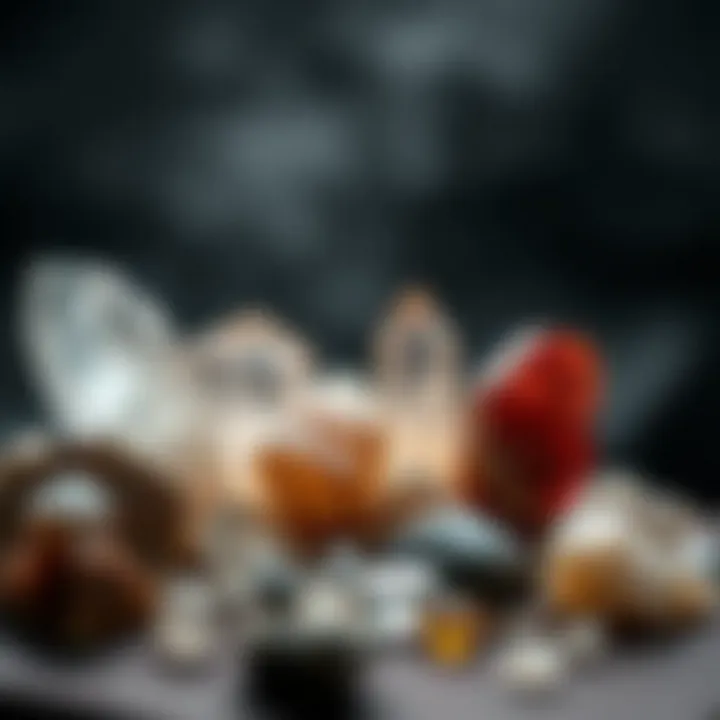
- High Temperatures: When rocks are subjected to high temperatures, they may become partially molten. This liquid state allows minerals to migrate and reorganize, often leading to the formation of larger crystals.
- Pressure Influence: Conversely, increased pressure compresses mineral grains, resulting in different structures. For instance, quartz can transform into a denser variety known as coesite under such conditions.
"The sublime beauty of crystalline structures often belies the rigorous environmental conditions they have endured."
This interplay between temperature and pressure is not uniform; various geological settings create unique environments. This leads to a diversity in crystal morphology based on their birth conditions. For collectors, understanding these dynamics can provide insights into the rarity and desirability of specific specimens.
Chemical Composition of Host Rocks
The chemical elements that constitute host rocks play a pivotal role. Different minerals, rich in various elements, can significantly impact the crystals that form within them. The availability of particular ions determines which crystals develop and their overall characteristics.
- Silicate Minerals: The presence of silicon and oxygen gives rise to silicate minerals, the backbone of most crystal formations.
- Carbonates: In limestone, for example, calcium carbonate can manifest as calcite, further highlighting how compositional variations lead to different crystal types.
Moreover, the presence of impurities can introduce a multitude of colors and external features in crystals, enchanting collectors and hobbyists alike. Thus, grasping the chemical composition opens a window into understanding crystal varieties.
Time: The Essential Element of Formation
Time is perhaps the most underappreciated but vital factor in crystal development. The duration that minerals spend under specific thermal and pressure conditions greatly influences crystal growth.
- Slow Cooling: Gradual cooling of magma allows for larger crystals to form, a phenomenon common in granitic rocks.
- Rapid Cooling: Conversely, rapid cooling can yield smaller crystals, as seen in volcanic rocks like basalt.
Ultimately, the time factor also intertwines with other elements, such as temperature and pressure, creating a complex web of influences. Collectors should note that older formations often yield more unique and variably structured specimens, making them coveted pieces in their collections.
Collection and Preservation Techniques
Collecting and preserving crystals encased in rock is not just a hobby; it's an art that reveals a deep respect for geology and nature. The methods of collection and preservation have lasting effects, not only on the condition of the specimens themselves but also on their scientific and aesthetic value. This section will explore how one can effectively gather these natural treasures and ensure their longevity.
Best Practices for Rock Collecting
When it comes to rock collecting, understanding local regulations is crucial. Laws vary widely; some areas have strict rules about what can be taken and where. Always check with local geological or environmental agencies for permissions. Ethical collecting practices also dictate that you leave environments as you found them. It’s not just about the crystals; it’s about preserving habitats.
A few practical tips include:
- Use the Right Tools: Invest in proper tools like rock hammers, chisels, and safety goggles. A good backpack for transporting your finds is also essential.
- Think About Your Footprint: Stick to trails when possible and avoid disturbing fragile ecosystems. This not only helps in conservation but also makes future collecting easier for others.
- Document Your Find: Take notes or photographs of the collection site, as it can serve as valuable information for future reference.
Cleaning and Preserving Crystals
Cleaning crystals is as important as the initial collection itself. Removing debris without damaging the crystal is a key skill. For most specimens, it’s advisable to use a soft brush or cloth combined with water. Avoid harsh chemicals, as they can lead to damage.
- Gentle Techniques: For delicate or coated crystals, a gentle wash with lukewarm water and a soft-bristled toothbrush may work wonders.
- Natural Solutions: In some cases, a mild vinegar solution can help remove unwanted mineral deposits, but it’s essential to test on a small area first.
Once cleaned, drying the crystals properly is vital. Air drying should be done in a safe space away from direct sunlight to prevent discoloration.
Storage Solutions for Long-Term Care
Storage plays a significant role in preserving the integrity of crystals. Improper storage can lead to scratches, chips, and even breakage over time.
Here are some effective storage tips:
- Use Soft Cloth Pouches: Individual fabric or soft leather pouches can reduce friction and prevent scratching. Solutions like microfiber cloth pouches work great.
- Display Cases: If showcasing your finds, consider using UV-protected display cases to shield them from sunlight, which can fade colors over time.
- Climate Control: Maintain moderate temperature and humidity levels in your storage area. Crystals can be sensitive to damp environments, which might promote mold or deterioration.
"The most beautiful crystals are not merely those found but those that are cared for with skill and respect."
Follow these guidelines, and you’ll not only enjoy your crystals aesthetically but also preserve their histories. For further reading and regulations, explore sources like wikipedia.org, britannica.com, or your local geological site to get in-depth knowledge about responsible collecting practices.
Historical Significance of Crystals in Rocks
Crystals encased in rocks carry a legacy that goes beyond mere geological curiosity. They have served as symbols, tools, and resources for human societies throughout history, influencing cultures in significant ways. By probing into their historical significance, we gain insight not only into the past but also into the ongoing relationship between humans and the natural world. This section highlights the cultural interpretations and beliefs surrounding crystals, as well as their integral role in ancient civilizations.
Cultural Interpretations and Beliefs
Across various cultures, crystals have been ascribed meanings that reflect their beauty and mystique. They often appear in folklore, spirituality, and traditional medicine. For instance, in many Indigenous cultures, crystals like quartz and amethyst are regarded as powerful talismans that can harness spiritual energies or foster healing.
- Symbolism: Many cultures believe that different crystals have specific attributes. For example, jade is revered in Chinese culture for its association with good luck and prosperity. Likewise, in ancient Egyptian culture, lapis lazuli symbolized the night sky, representing the essence of the divine.
- Healing Properties: The use of crystals in therapeutic settings can be traced back centuries. Traditional practices often used stones like rose quartz for emotional healing, exploiting their purported ability to resonate with the heart chakra.
- Ritualistic Use: Crystals often hold an important place in ceremonies. For example, certain Native American tribes use crystals in rituals to invoke healing or rain.
This cultural tapestry illustrates that crystals are not just geological entities; they possess layers of significance that resonate deeply within human history.
The Role of Crystals in Ancient Civilizations
Crystals have played pivotal roles in ancient civilizations, not only in everyday life but also in large scale societal projects. They were utilized in tools, jewelry, and trade, creating a connective thread between civilizations.
- Practical Applications: In ancient Mesopotamia, lapis lazuli was ground into a powder to create vibrant blue pigments for art and cosmetic use. Cultures like the Greeks and Romans often employed crystals in their medical practices.
- Jewelry and Status: Crystals were not only decorative; they signified wealth and power. Pharaohs adorned themselves with jewelry made from turquoise, reflecting their status and connection to the divine.
- Trade and Economy: Crystals have historically been traded across vast distances. The Silk Road, for instance, allowed for a flow of precious stones like diamonds and rubies, facilitating cultural exchanges that shaped societies.
The significance of crystals in ancient civilizations tells a story of human ingenuity and belief systems. Rocks and their crystalline inhabitants serve as a bridge connecting us to our ancestors, shedding light on how they perceived the material world.
The story of crystals is indeed a mosaic made vibrant by diverse human experiences, woven through time and across cultures.
By understanding the historical roles of crystals, we can appreciate their continuing relevance in shaping modern perceptions of nature, beauty, and spirituality.
For further reading on cultural significance, check out Britannica's Crystal History and explore relevant discussions on platforms like Reddit.
Modern Applications of Crystals in Industry
The utilization of crystals stretches far beyond their beauty and allure; they play a pivotal role in various industries. Understanding these applications can provide valuable insights into how these natural phenomena are not just geological curiosities but also critical components in modern technology and healthcare.
Use of Crystals in Electronics
Crystals are at the heart of much of today's electronic technology. Quartz crystals, in particular, are renowned for their unique ability to resonate at specific frequencies. This property makes them essential for timing devices, such as clocks and watches. You see, the precise vibrations of a quartz crystal are employed to regulate the timing of electronic circuits, ensuring that devices maintain consistent time and performance.
But quartz isn’t the only game in town. Other types of crystals, like lithium niobate and piezoelectric crystals, are typically used in components like filters, oscillators, and transducers. For instance:
- Piezoelectric Crystals: These crystals generate an electrical charge in response to mechanical stress. This characteristic is vital in applications ranging from microphones to sonar equipment.
- Semiconducting Crystals: Silicon, widely used in computers, is another prime example. Its crystal structure allows it to effectively control electric current, forming the basis for every electronic device we use today.
In summary, the electronic industry’s reliance on crystals underscores their practical significance. As technological demands increase, ongoing research continues to unobtrusively push the boundaries of crystal applications, enhancing their capabilities in the digital age.
Crystals in Medicine and Therapy
Life sciences have also embraced the therapeutic potential of crystals. From diagnostic tools to treatment regimes, crystals serve multifaceted functions in the medical field. Take, for instance, crystals like sapphire and ruby, which are employed in specialized surgical instruments. Their hardness and biocompatibility make them ideal for precise applications.
Additionally, crystals are being explored for their benefits in health and wellness. Although controversial, the use of certain crystals in alternative therapy practices continues to gain traction among consumers. Some believe:
- Quartz Crystals: Engaged in meditation practices, many users assert that these crystals hold energies that can aid physical and mental healing.
- Amethyst: Known for its calming properties, it's often used in various healing practices and is thought to assist with issues related to stress and anxiety.
While the scientific community remains cautiously skeptical about the efficacy of such practices, there is no denying the growing interest surrounding crystals in holistic health. As more research is conducted, perhaps we will uncover more truths about how these geological wonders can truly contribute to well-being.
"Crystals embody nature's art, but their permanence in technology and medicine showcases their essence as functional marvels."
Through this deep exploration, it becomes clear that modern industries are not just consumers of crystalline materials; they are also collaborators with geological wonders. As we continue to peel back layers of understanding, the future looks promising for crystals in both technology and health.
Ecological Considerations of Crystal Mining
When exploring the subject of crystal mining, it’s essential to put a spotlight on the balance between extracting these geological gems and preserving the environment. While the allure of discovering striking crystals like amethyst or citrine can be irresistible to collectors, the methods employed in retrieval can carry significant implications for local ecosystems. This section will delve into how crystal mining impacts nature, as well as highlight the pressing need for sustainable practices to protect the delicate web of life surrounding mining sites.
Impact on Local Ecosystems
Crystal mining is not just a simple task of digging into the earth. It can produce ripples through local ecosystems in profound ways. Here are several key areas to consider:
- Habitat Destruction: Extracting crystals often involves significant land disturbance. Heavy machinery clears vegetation and alters the landscape. Such disruption can uproot local flora and fauna, making it difficult for some species to thrive, or even leading to extinction.
- Water Quality Concerns: The mining process frequently leads to sediment runoff and potential contamination of nearby water sources. Chemicals used in processing or transporting the crystals can leach into waterways, jeopardizing aquatic life and contaminating drinking supplies.
- Soil Degradation: The machinery utilized can compact soil, reducing its fertility and impairment of natural drainage systems. This decreases the land’s ability to support agriculture and other plant life.
The effects can cascade, leading to decreased biodiversity and loss of species that rely on a stable environment.
"Before we dig deeper into our quest for beautiful crystals, let's remember: the earth is not just a treasure chest; it's a living ecosystem that needs our respect."
Sustainable Mining Practices
The good news is that there are pathways to responsibly harvest crystals without wreaking havoc on our planet. Sustainable mining practices have garnered attention as crucial steps towards reducing ecological damage while still allowing enthusiasts to expand their collections. Here are some distinguished approaches:
- Minimize Surface Disruption: Employing methods that limit land disturbance can help maintain habitat integrity. Techniques in horizontal mining, for instance, allow for a more targeted approach, reducing the extent of land cleared.
- Reclamation Efforts: Once mining operations cease, rehabilitating the land restores its original state. This includes replanting native species to promote biodiversity and returning the soil to health.
- Responsible Sourcing: Demand is shifting towards crystals that have been mined ethically. Collectors are now encouraged to purchase from sources that prioritize environmental sustainability and social responsibility.
- Implement Conservation Strategies: Collaborating with environmental organizations can yield better outcomes. These partnerships create comprehensive strategies that balance economic needs with ecological preservation.
In light of these practices, individuals can appreciate the beauty of crystals while simultaneously contributing to the longevity of the environment.
Overall, discussing the ecological considerations of crystal mining leads us to a broader reflection on how we engage with our planet's resources. By focusing on sustainable practices, we can ensure that future generations of rock and fossil collectors can continue to explore and cherish these stunning natural formations.
The Future of Crystal Research and Collection
In the realm of geology and mineralogy, the future of crystal research and collection is not just a matter of novelty but an essential stepping stone toward understanding Earth's history and its evolving ecosystems. As we venture deeper into our exploration of crystals encased in rock, advancements in technology and shifts in collector engagement are reshaping how we approach this fascinating field. Among the many elements that define this future, two stand out: the emerging technologies that facilitate mineral identification and the evolving trends within collector communities.
Emerging Technologies in Mineral Identification
The dawn of sophisticated geological tools has fundamentally altered the landscape of crystal research. Emerging technologies are enabling enthusiasts and professionals alike to identify minerals with unprecedented accuracy and efficiency. For example, handheld X-ray fluorescence (XRF) analyzers provide immediate insights into a mineral's elemental composition without the need for invasive sampling. With a simple scan, you can gather crucial data that once required extensive laboratory work, saving both time and resources.
Another groundbreaking innovation is the use of artificial intelligence (AI) in mineral detection. Researchers are developing AI algorithms trained to recognize crystal structures and mineral compositions based on photographs. This integration of technology not only enhances identification accuracy but also democratizes access to knowledge, allowing avid collectors to identify specimens with just a smartphone app.
Moreover, the development of 3D imaging techniques provides greater clarity in visualizing crystal structures at atomic levels. Such advancements can lead to new discoveries about crystal growth processes and their interactions within various geological settings. The implication is profound: understanding the intricacies of crystal formation can further our knowledge about Earth’s geological activity as well as the environmental conditions that favor crystalline development.
Trends in Collecting and Enthusiast Communities
The crystal-collecting community is undergoing a profound transformation, driven by digital connectivity and a growing thirst for knowledge. Traditionally, rock hounds would gather in local clubs or attend trade shows to share their finds and expertise. However, with the rise of social media platforms and online forums, there is now an unrestricted flow of information and resources. Websites like Reddit's r/crystals and Facebook groups allow for instantaneous exchange of ideas, fostering a sense of camaraderie among enthusiasts across the globe.
Furthermore, the emphasis on sustainability is shaping collecting practices. Collectors are increasingly advocating for ethical sourcing and mindful collection, sparking conversations about how to minimize ecological harm during the process of mineral collection. This shift in mindset encourages new collectors to think critically about where and how they obtain their specimens, ensuring that the future of crystal collection remains respectful of our planet's delicate ecosystems.
The confluence of technology and community engagement heralds a new age for crystal enthusiasts, emphasizing knowledge, ethics, and connectivity.